How to Reduce Repeated API Support Questions
Repeated API questions usually mean the support system cannot see the same contract developers are trying to use. Reducing those tickets starts with better context, routing, and feedback loops.
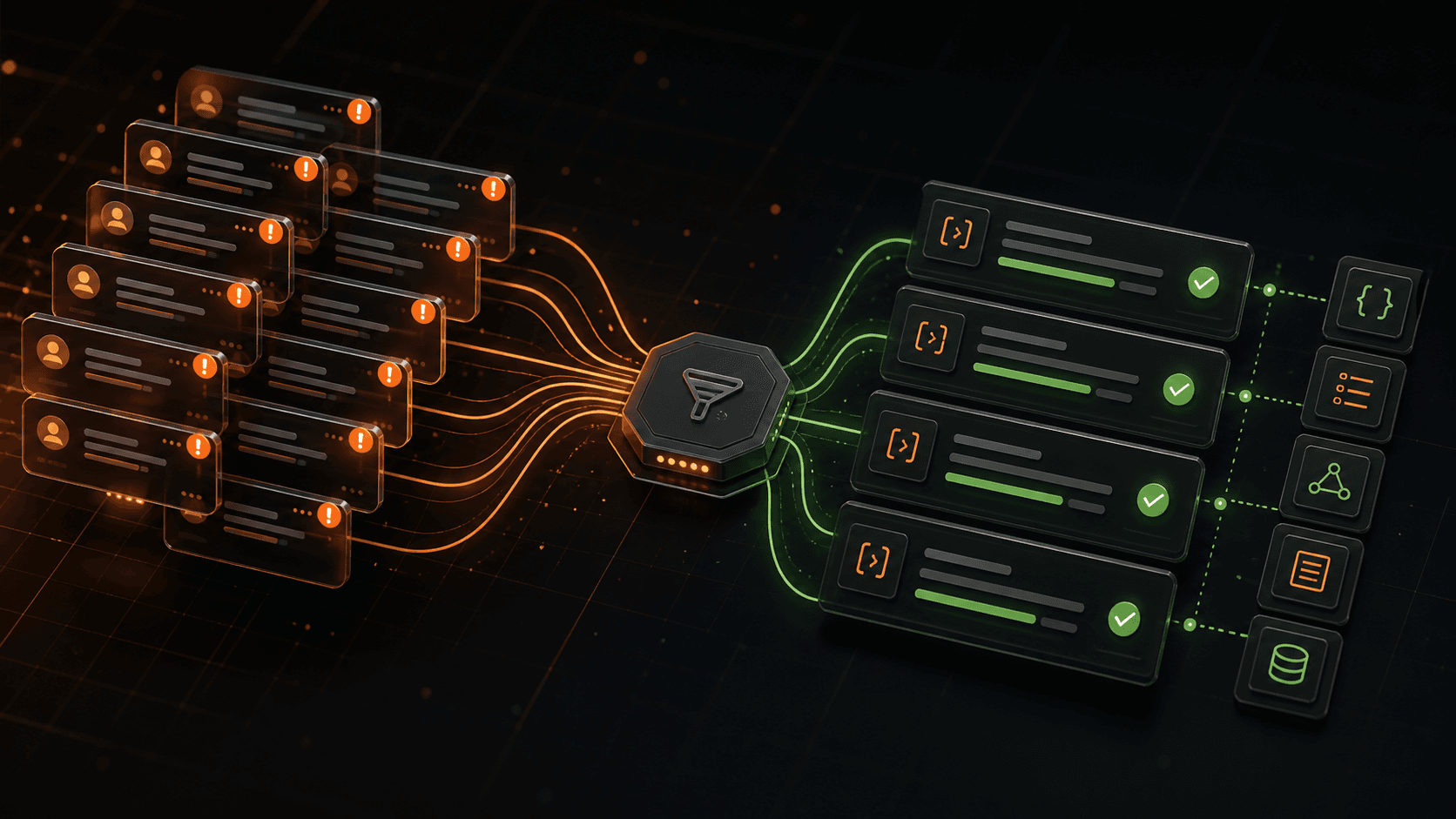
Repeated Questions Are a Signal
Repeated API support questions are rarely just a documentation problem. They are usually a context problem. Developers ask the same questions when docs are hard to search, examples drift from real behavior, support replies do not feed back into the source of truth, and every channel sees a different slice of the customer journey.
The goal is not to eliminate human support. The goal is to make the common questions answerable from shared evidence so operators can spend their time on ambiguous, account-specific, or high-risk issues.
Group Questions by the Fact They Need
Start by grouping repeated tickets by the technical fact they depend on: endpoint selection, auth mode, scope, webhook signature, error code, pagination, rate limit, payload field, SDK example, or environment setup. That grouping turns vague support volume into a list of missing or unclear API facts.
Once the pattern is visible, the fix can be precise. A confusing OAuth scope needs a source update. A repeated 400 error might need a better request example. A webhook question might need a testable signing guide. A generic macro will not solve a missing contract.
- Tag conversations by endpoint, auth area, error, or integration step.
- Attach the strongest source evidence to each repeated answer.
- Turn unresolved patterns into documentation and product backlog items.
- Measure whether the same question returns after the source improves.
Use AI Where the Evidence Is Strong
A support agent can help only when it sees the right evidence. For API teams, that means source ingestion should preserve endpoint-level detail instead of flattening docs into generic paragraphs. The agent should know which method, path, parameter, request body, response, and auth rule support the answer.
When the evidence is not strong enough, the system should ask one clarifying question or hand off. This still reduces repeat work because the handoff package gives the operator the attempted context, the missing fact, and the customer history.
Feed the Answers Back Into Context
The loop closes when support outcomes improve the source. A repeated answer should not live only in an operator's message history. It should become a clearer doc section, a stronger source chunk, a better example, a testable endpoint note, or a product fix.
That is why API support needs a shared context layer. The inbox, docs ingestion, support agent, and analytics need to point at the same knowledge graph so every resolved question can make the next one easier.
Sources and Standards
This Woes article references public standards and developer documentation that shape API support workflows.
Related Woes Pages
Continue into the Woes product pages that connect this topic to API-native support workflows.