Designing a Unified Inbox for Live Chat, Email, and Discord
Support teams should not have to choose between live chat speed, email depth, and Discord community presence. The channels are different doors into one customer problem.
Channels Are Inputs, Not Product Silos
The fastest way to lose customer context is to organize support by tool instead of conversation. Live chat has one thread, email has another, Discord has a third, and the operator has to mentally stitch them together. That works while the team is tiny. It breaks when there are multiple operators, an AI agent, and customers who switch channels depending on urgency.
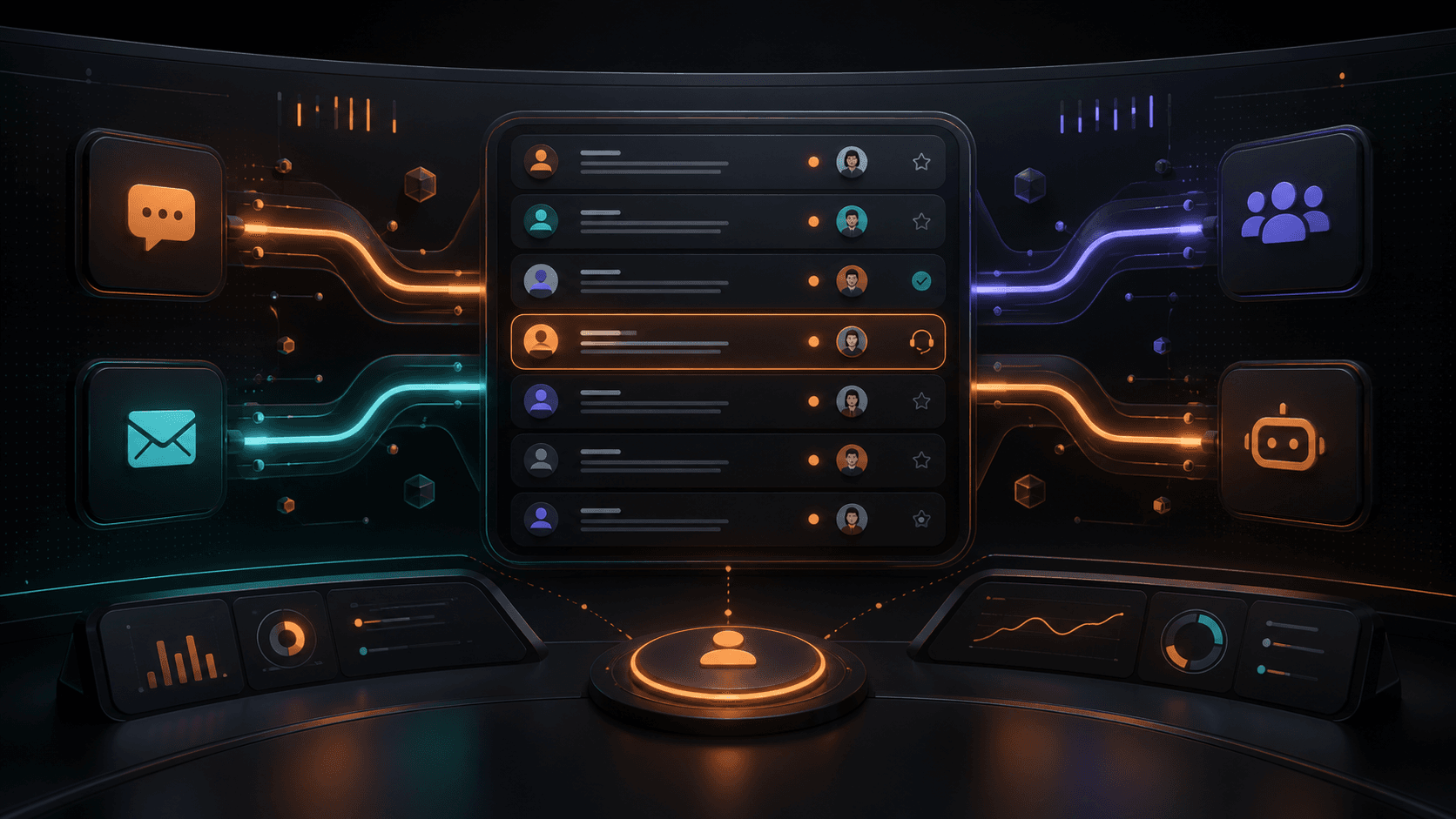
A unified inbox starts with a simple product decision: chat, email, and Discord are channel values over one conversation model. They should not become three separate products inside the same app. The operator should see one queue, one customer record, one timeline, one assignment model, and one set of automations.
The Inbox Needs a Shared Operating Model
Every channel has different ergonomics. Chat needs immediacy, typing indicators, and quick assignment. Email needs threading, deliverability, signatures, and reply-to behavior. Discord needs community identity, guild context, and public versus private boundaries. Unifying the inbox does not mean pretending these details are identical.
The trick is to preserve channel-specific metadata while normalizing the work. Operators should be able to filter by channel, see the source of each message, and respond in the correct place, but the triage mechanics should feel consistent. A new inbound message, a customer reply, an assignment, an AI handoff, and an internal note should all be first-class events on the same timeline.
- Use one conversation lifecycle for open, pending, solved, and escalated states.
- Keep channel metadata visible without forcing operators into separate tools.
- Centralize assignment, unread state, tags, notes, and SLA behavior.
- Let automations route by event, channel, customer, and API topic without duplicating rules.
Email Has to Be a Real Channel
Email is usually where unified support products get fuzzy. It is slower than chat, but it carries richer detail, attachments, external participants, and a stronger expectation of professional formatting. A good inbox treats email as a durable conversation channel, not as an afterthought bolted onto chat.
That means replies should come from verified domains, inbound messages should map to the right workspace and conversation, and forwarding should be easy for teams that already have an address like support@company.com. The customer should never see the plumbing. Operators should never wonder whether a reply left the system.
Discord Support Needs Context and Boundaries
Discord adds a different kind of complexity. Some support starts in public, some moves to a private thread, and some is really community discussion rather than account-specific support. The inbox needs to capture the parts that require operator attention without flattening the social shape of Discord.
For developer tools, Discord is often where integration pain first appears. A customer may ask a quick question in a channel, then need a secure follow-up by email or chat. If the inbox keeps that relationship intact, the team can respond without losing the trail or asking the customer to repeat themselves.
Unified Data Makes Support Measurable
The best operator inbox feels calm because it is opinionated. It shows what needs attention, why it is there, who owns it, what the customer has already said, what the AI agent attempted, and what the next action should be. It does not make the operator open three tools to answer one question.
When every channel flows into one model, the support team can measure the work honestly. Which API areas create the most conversations? Which channels need faster response? Where does AI help, and where does it hand off? Those answers only become reliable when the data is unified from the start.
Sources and Standards
This Woes article references public standards and developer documentation that shape API support workflows.
Related Woes Pages
Continue into the Woes product pages that connect this topic to API-native support workflows.