When AI Support Should Hand Off to a Human
Human handoff is not where AI support fails. It is how a responsible support agent preserves trust when evidence is missing, the issue is risky, or a customer needs a person.
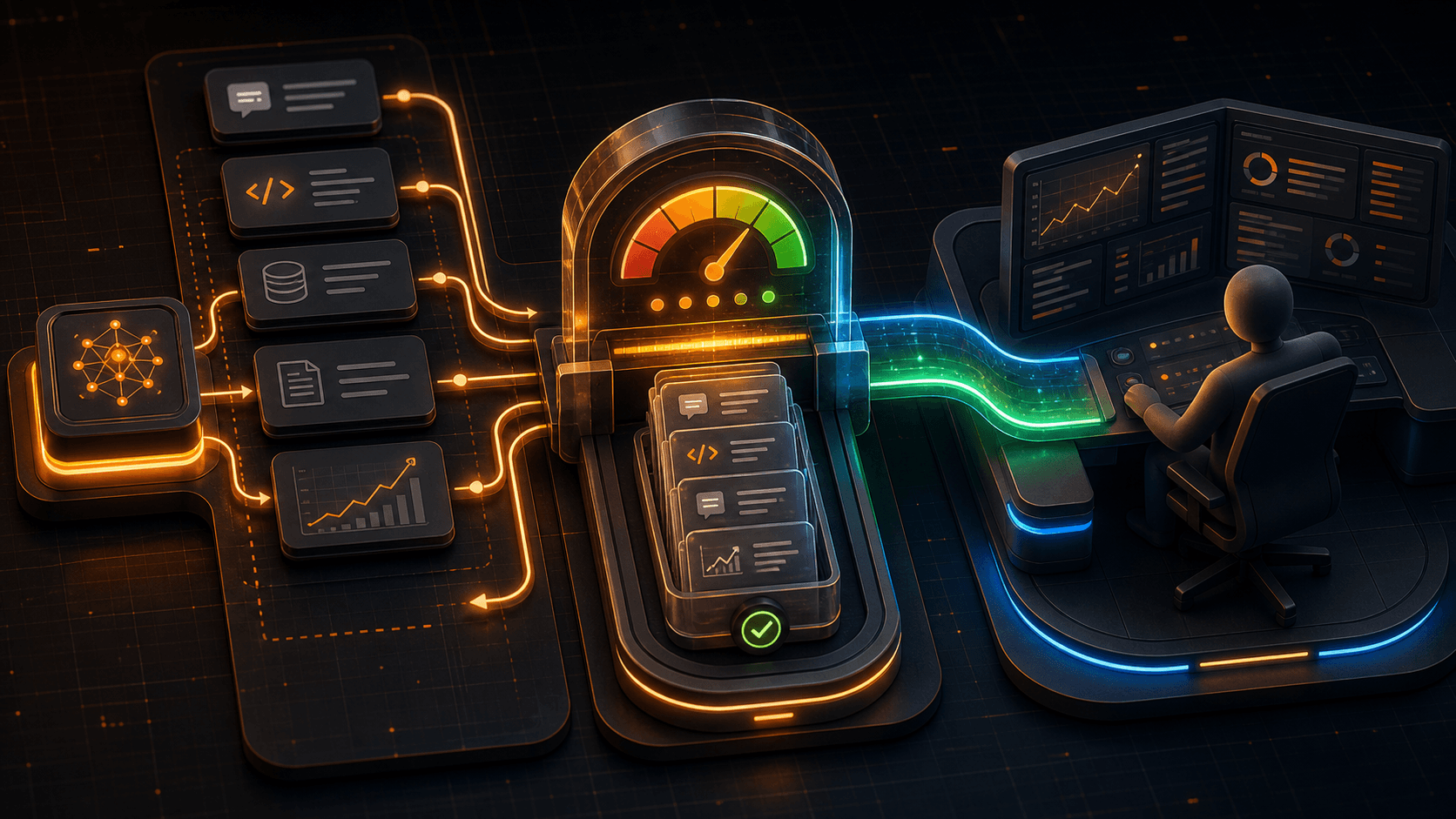
Handoff Is a Trust Feature
AI support should not be judged only by how often it avoids a human. In developer support, a wrong answer can cost more than no answer. A responsible agent needs a clear handoff policy for low-confidence, high-risk, account-specific, or emotionally sensitive cases.
That policy should be visible in the product. Customers should understand when they are being routed to a person, and operators should receive enough evidence to continue the work without asking the customer to repeat everything.
Define the Triggers
The first handoff trigger is missing evidence. If the question depends on an endpoint, auth rule, field, response shape, plan limit, or product behavior that the agent cannot retrieve, it should not invent the missing fact.
The second trigger is risk. Requests involving credentials, destructive actions, production incidents, account-specific state, billing, security, or legal commitments should move toward a human unless the product has a very explicit safe path.
- Hand off when retrieved API context is insufficient or conflicting.
- Clarify when one missing detail would change the answer.
- Escalate when the customer asks for a person.
- Keep raw secrets, provider internals, and operator-only traces out of customer replies.
Package the Evidence
A handoff should include the original question, recent thread context, retrieved sources, attempted answer, confidence reason, missing information, and suggested next step. Without that package, the operator starts from zero and the customer experiences the handoff as friction.
For API support, the best handoff packages are evidence-first. They show which source or endpoint was relevant, what the agent believed it could answer, and what fact prevented a safe response.
Measure What Happens After Handoff
Teams should measure handoff quality, not just handoff volume. Useful signals include whether the operator resolved the issue, whether the source needed improvement, whether the customer supplied missing details, and whether the same pattern recurs.
Over time, high-quality handoffs become an improvement loop. Some cases become new docs, source chunks, examples, tests, or automations. Others remain human-owned because they truly require judgment.
Sources and Standards
This Woes article references public standards and developer documentation that shape API support workflows.
Related Woes Pages
Continue into the Woes product pages that connect this topic to API-native support workflows.